A masterclass in “Flood Resilience Futures” at the 26th International River Symposium
The 26th International River Symposium (Brisbane, 8–10 September 2025) brought together 300 river leaders, practitioners, scientists, policy makers, artists, community voices, and out-of-the-box thinkers from over 50 countries. They shared and explored bold solutions to accelerate the improvement of sustainable management and resilience of rivers worldwide.
The Flood CoP team – along with partners – were proud to contribute through our interactive stand on the Riverwalk Showcase, the River Mosaic storytelling activity, and by hosting a Masterclass on Flood Resilience Futures.
Our activities activities showcased how practioner knowledge, lived experience, role diversity, and collaborative tools can interweave physical, ecological and social sciences along with engineering, land use planning and community engagement and partnerships to shape much needed resilient river and healthy catchments.
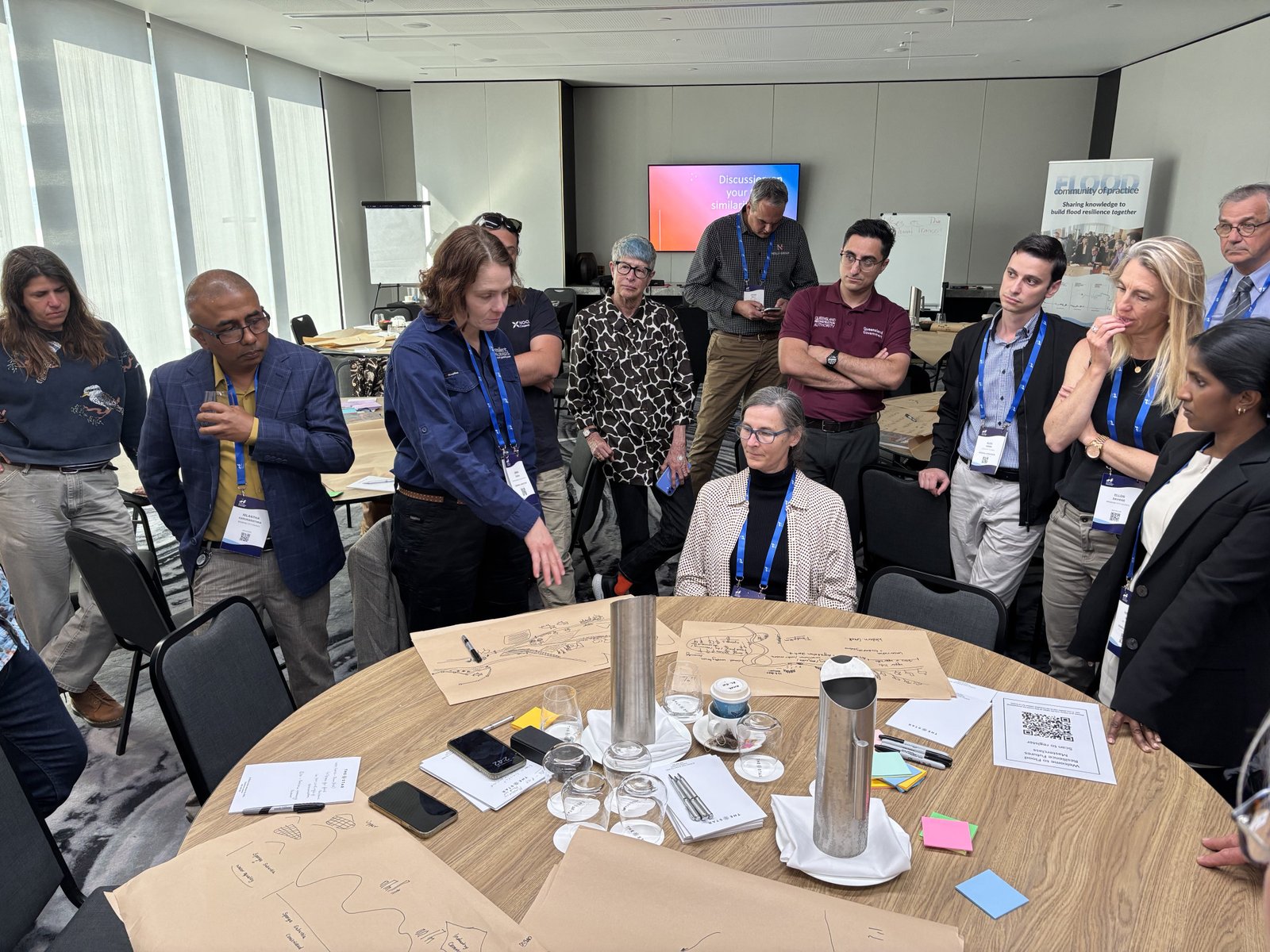
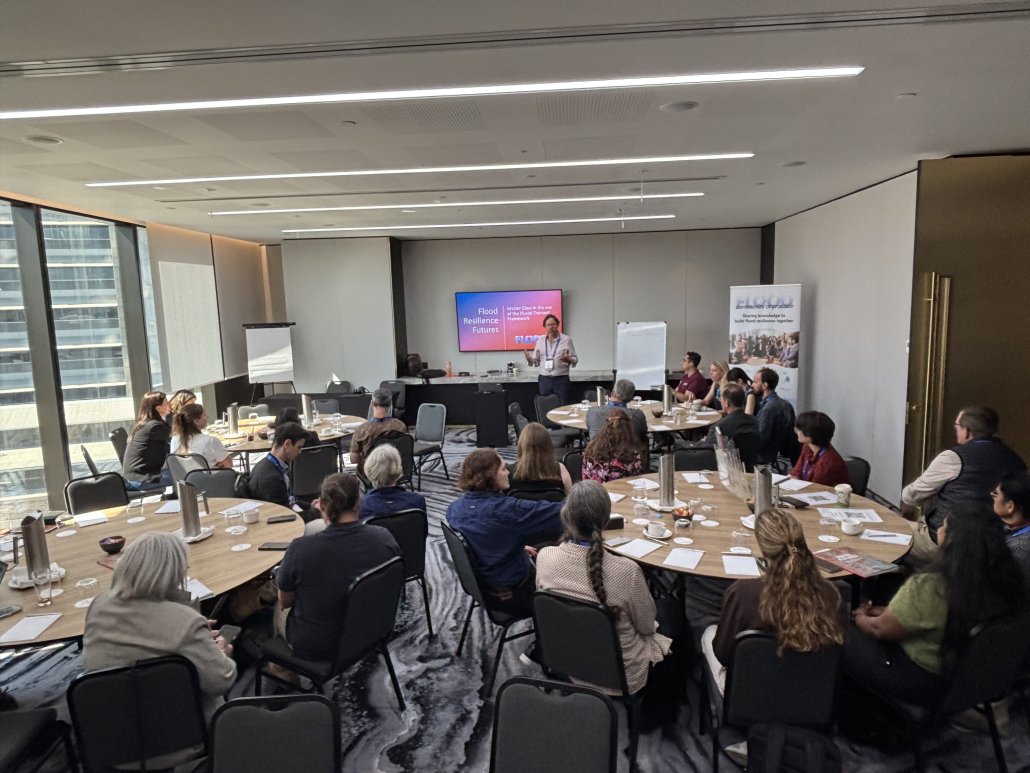
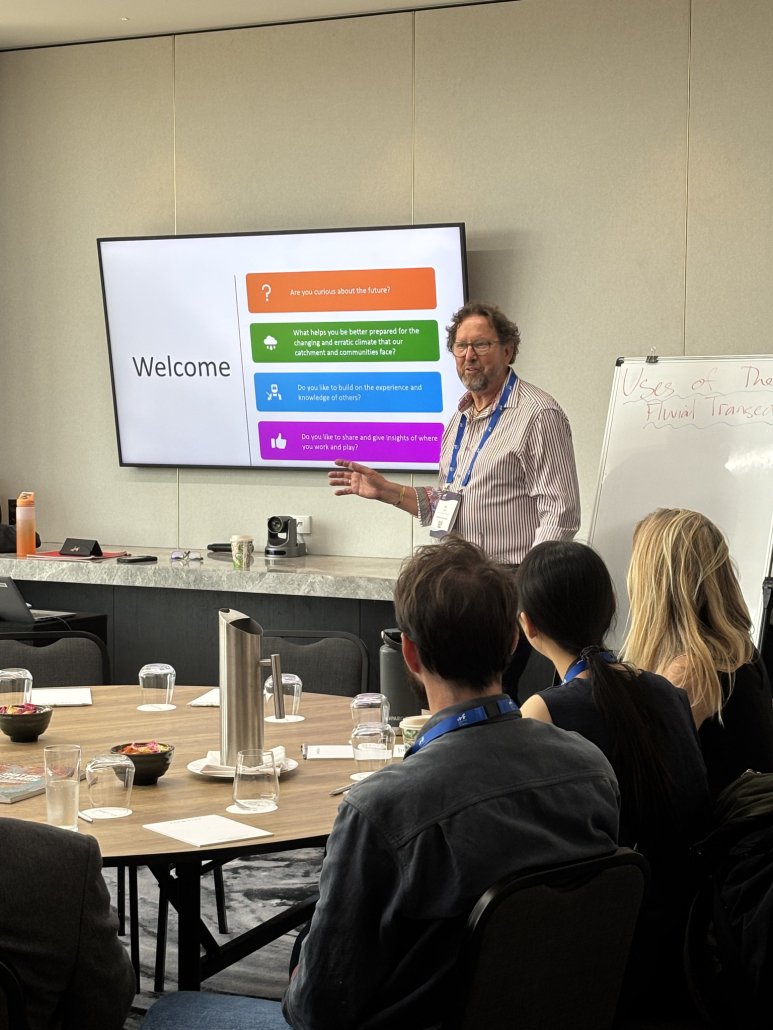
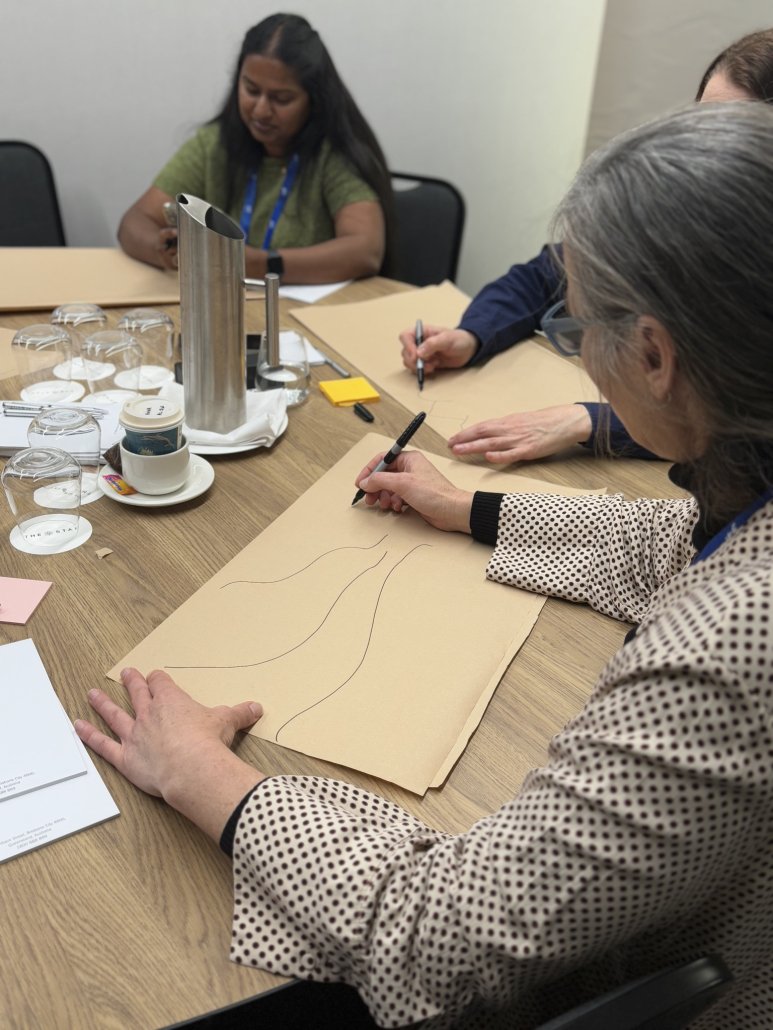
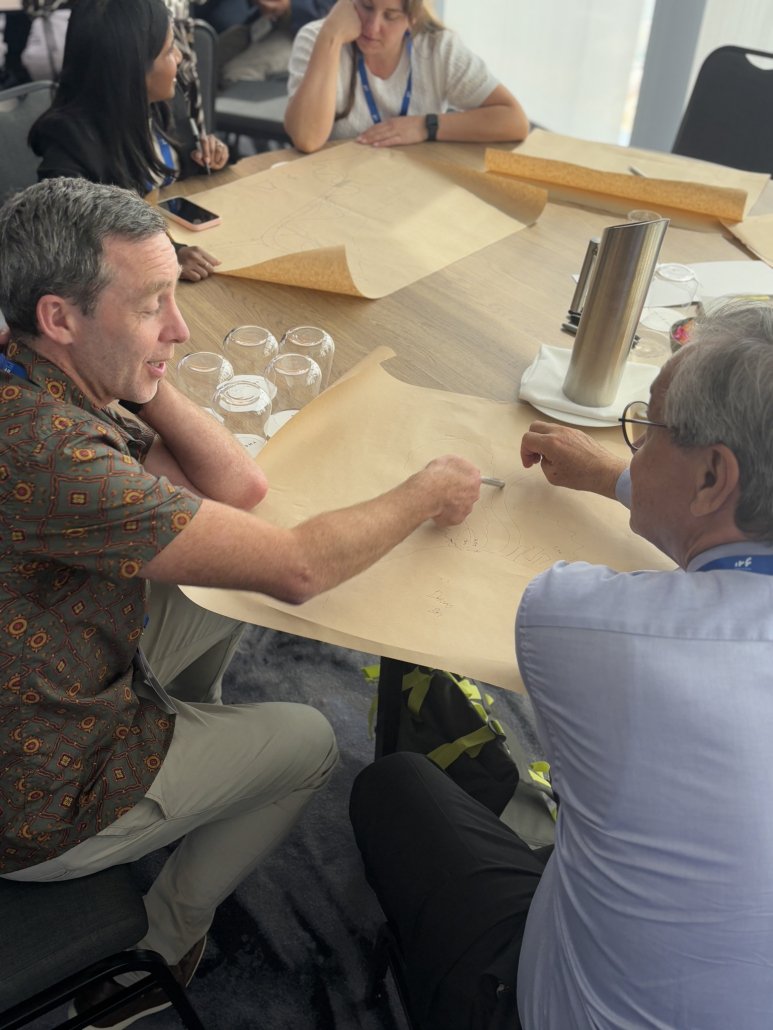
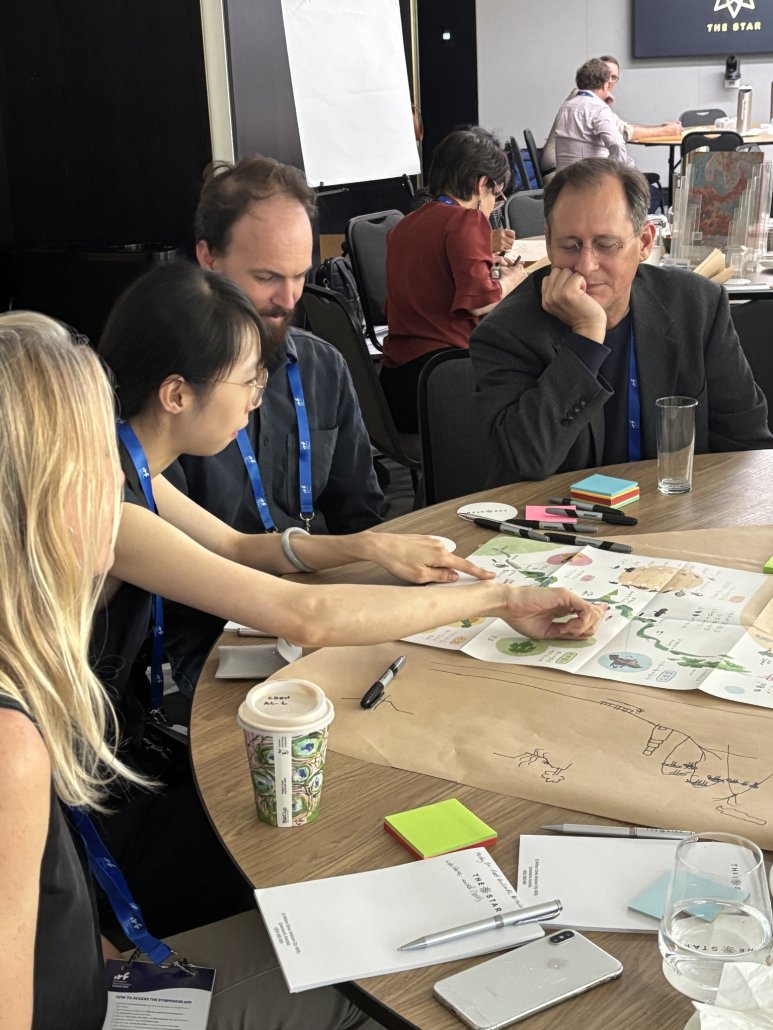
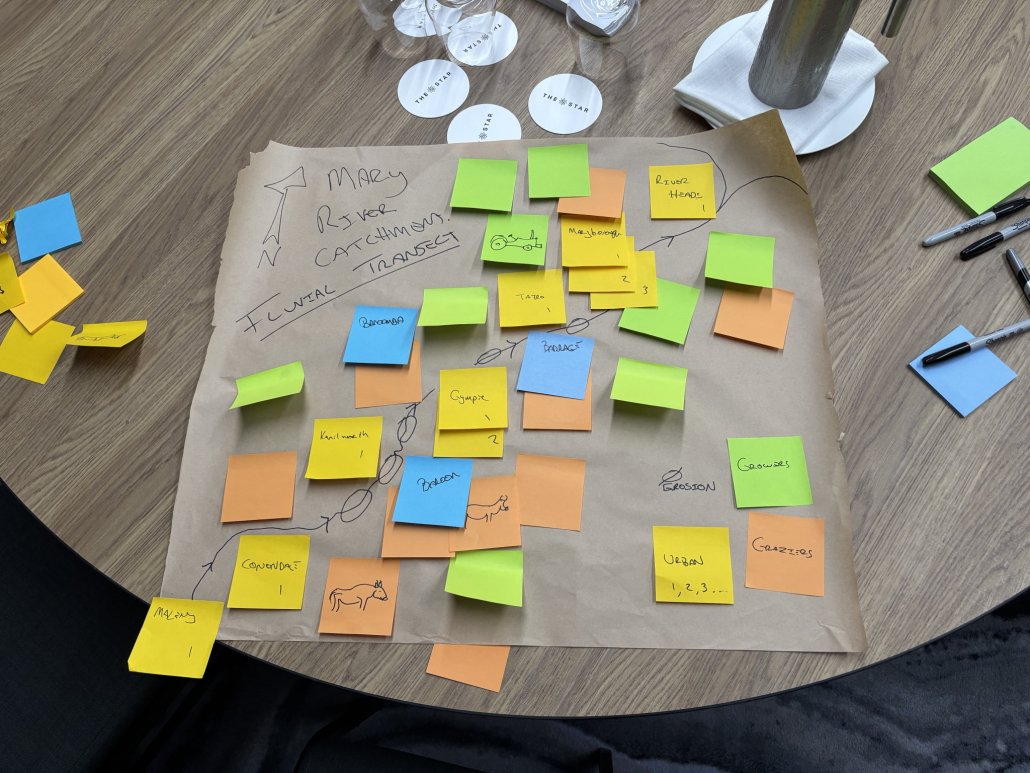
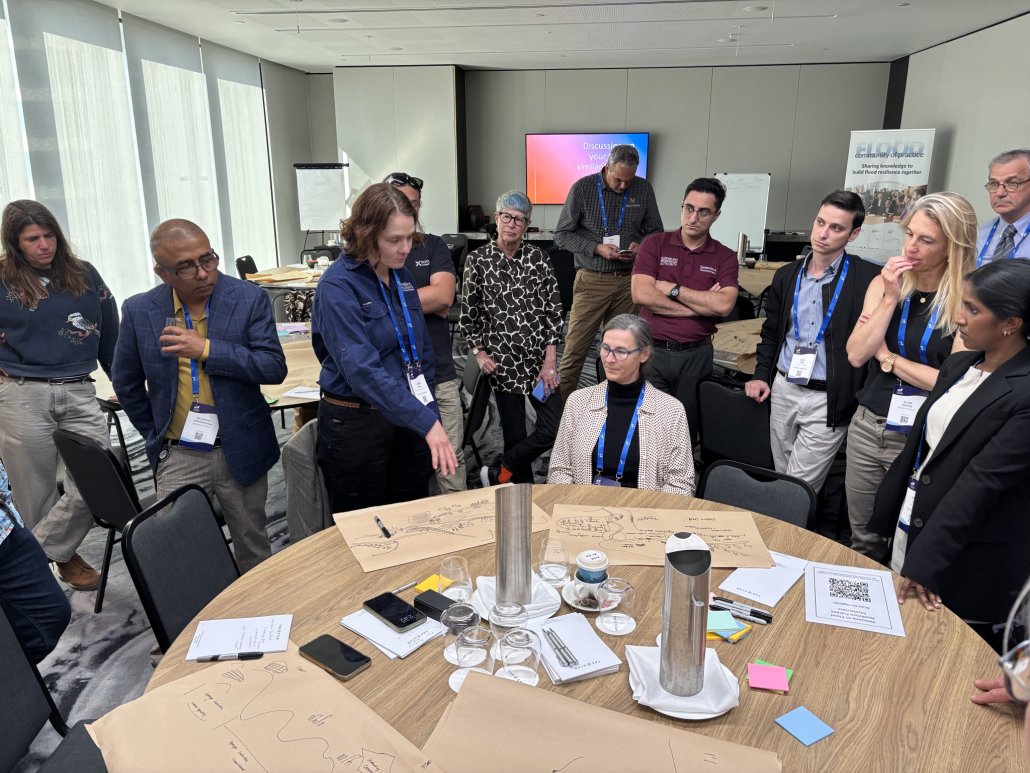
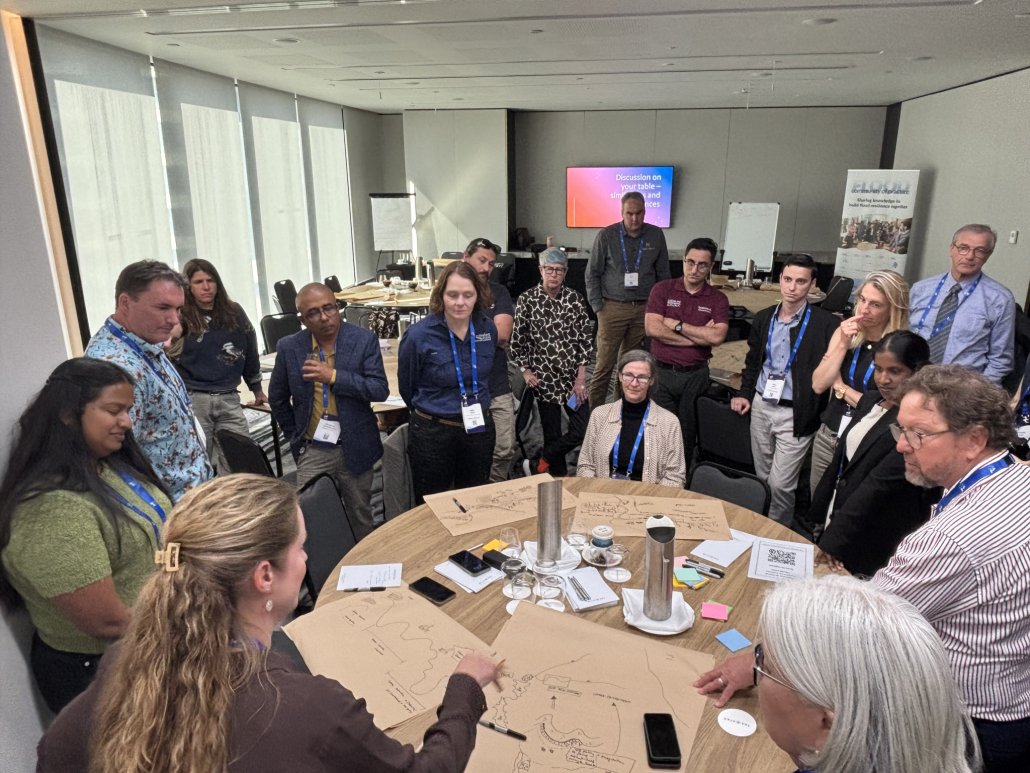
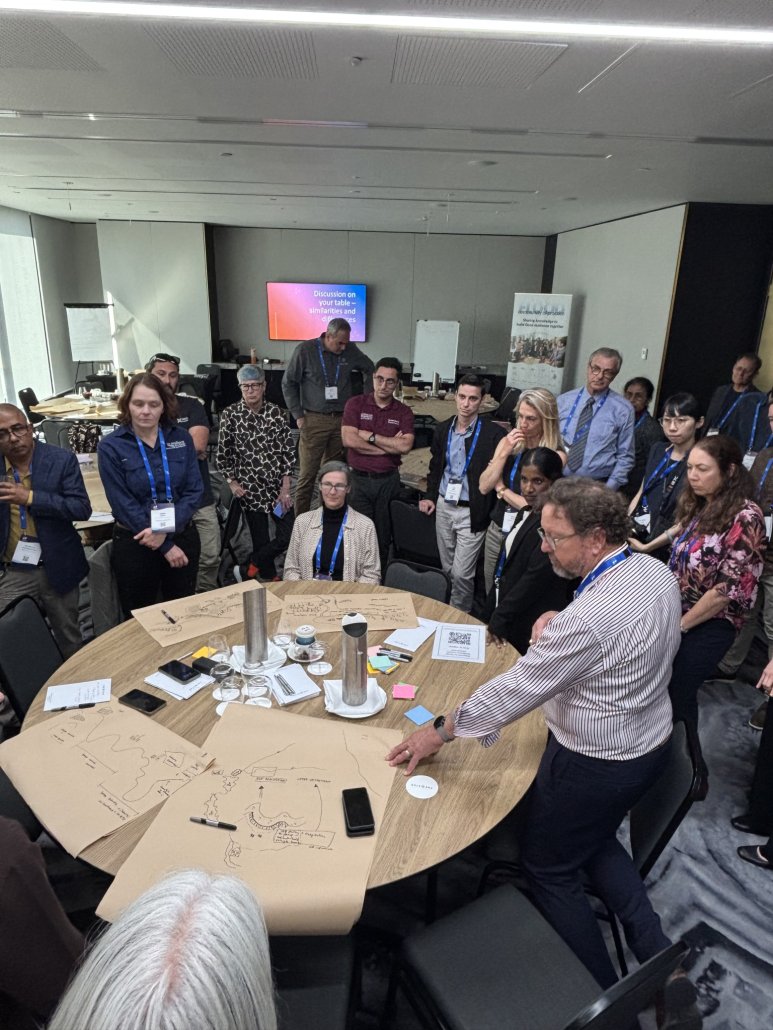
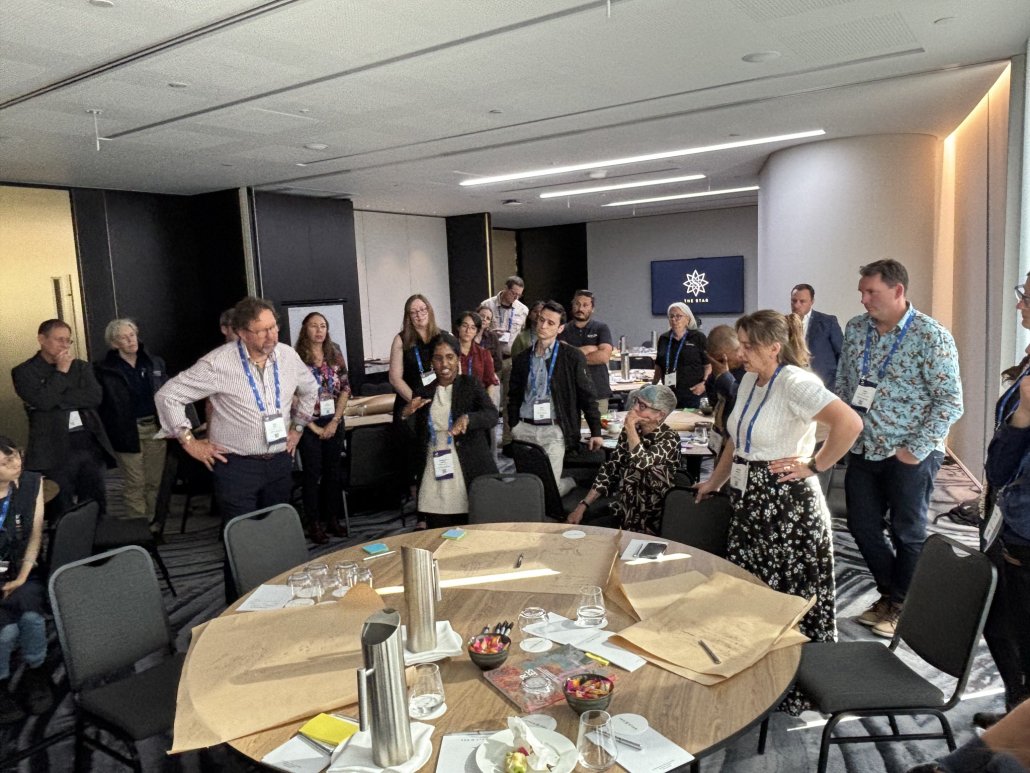
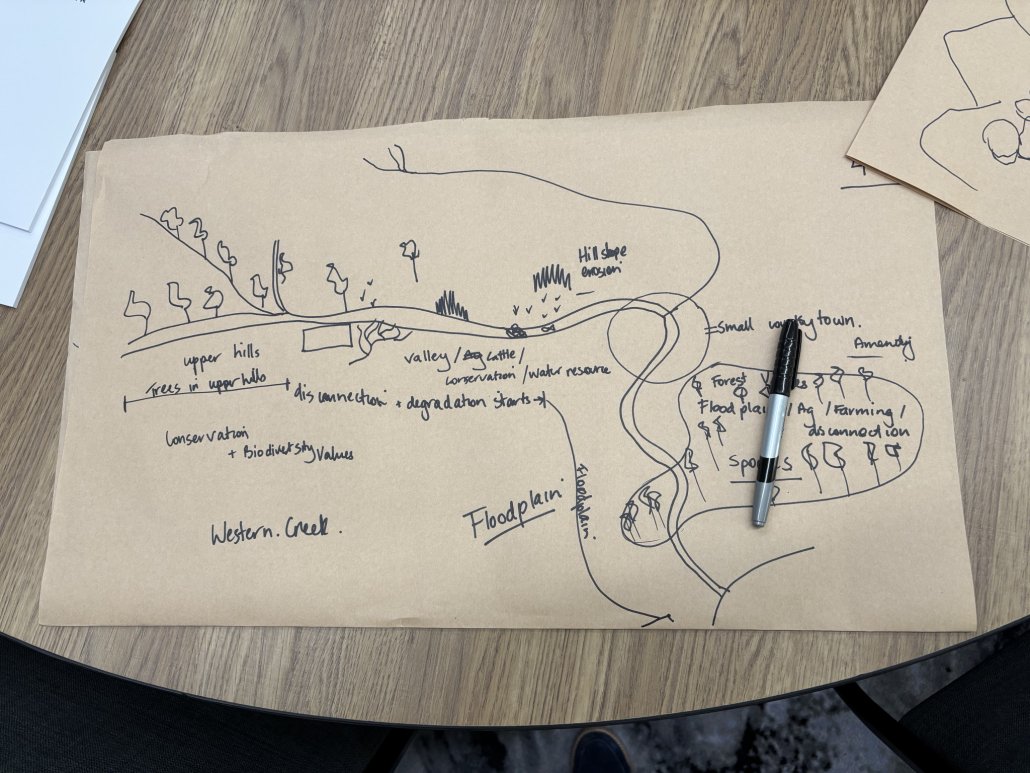
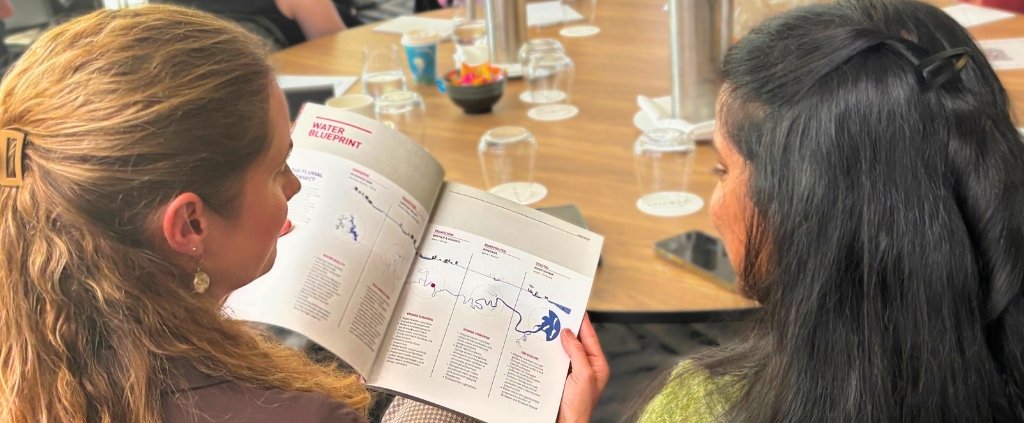
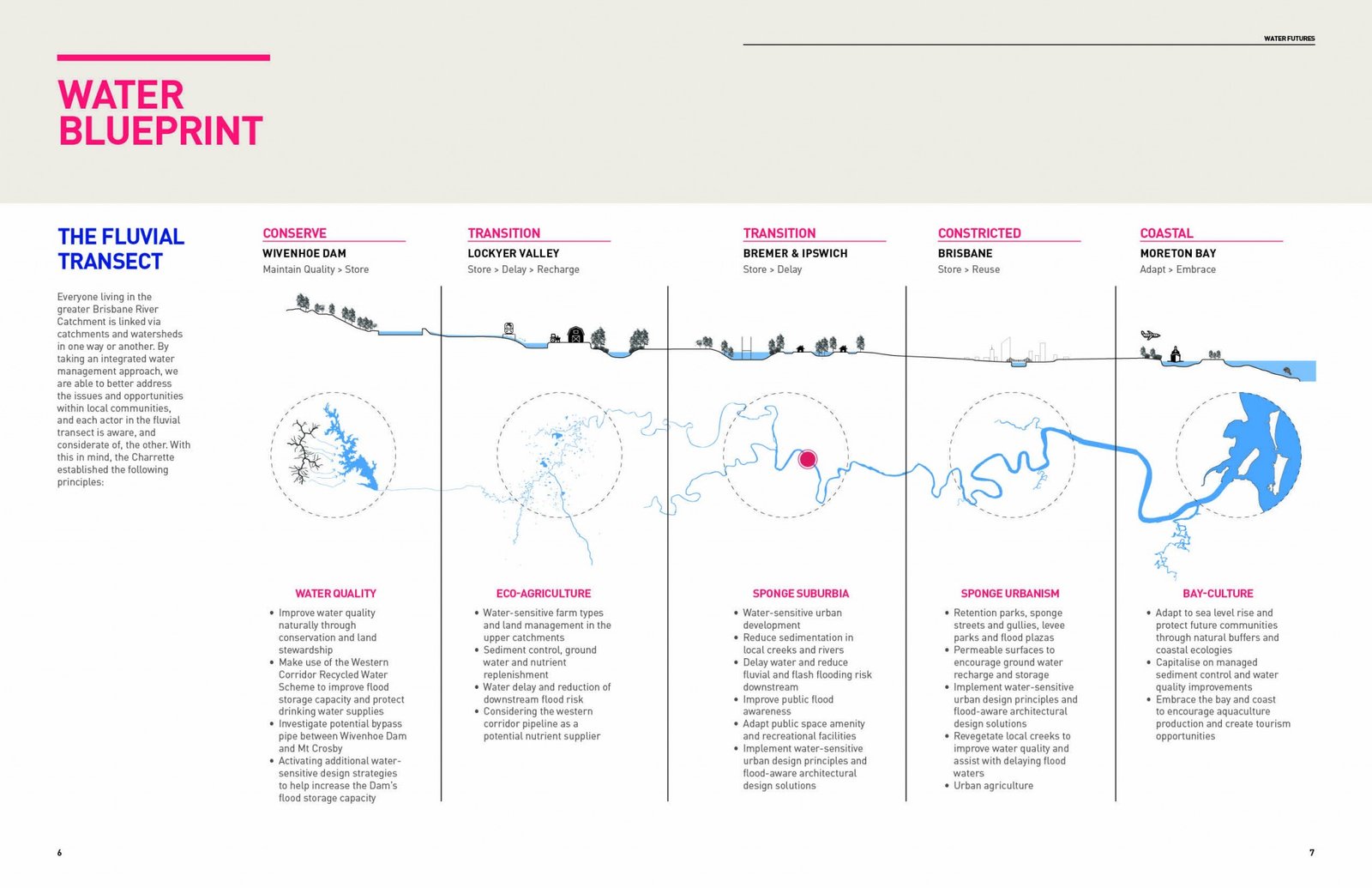
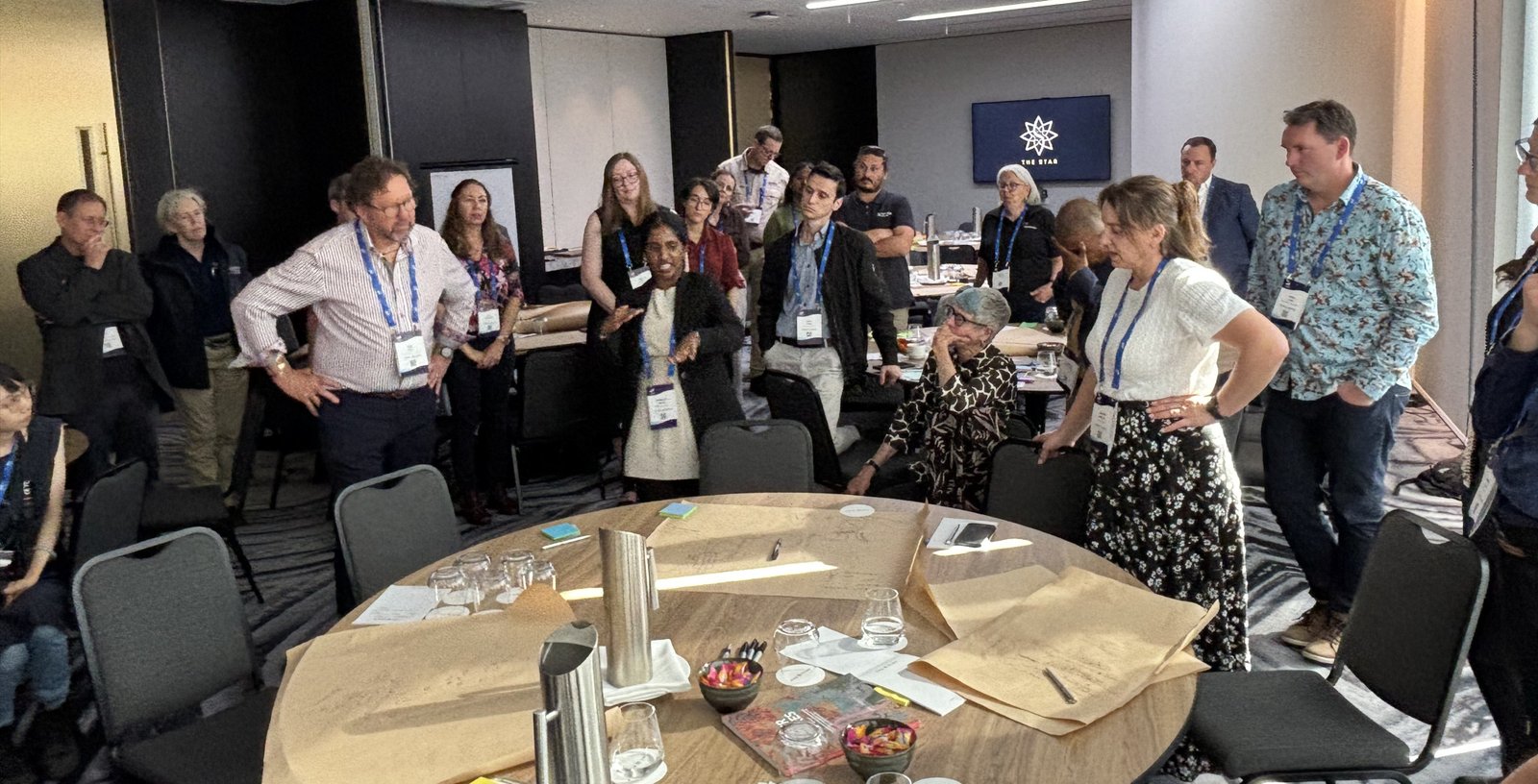
On Day 1 of the Symposium, FloodCoP hosted a half day Masterclass: Flood Resilience Futures, an interactive session grounded in the use of the Fluvial Transect methodology (developed through the SEQ Water Futures project), offering hands-on, visual tools to help participants map catchments, identify risk zones, and co-create locally relevant flood resilience responses and strategies.
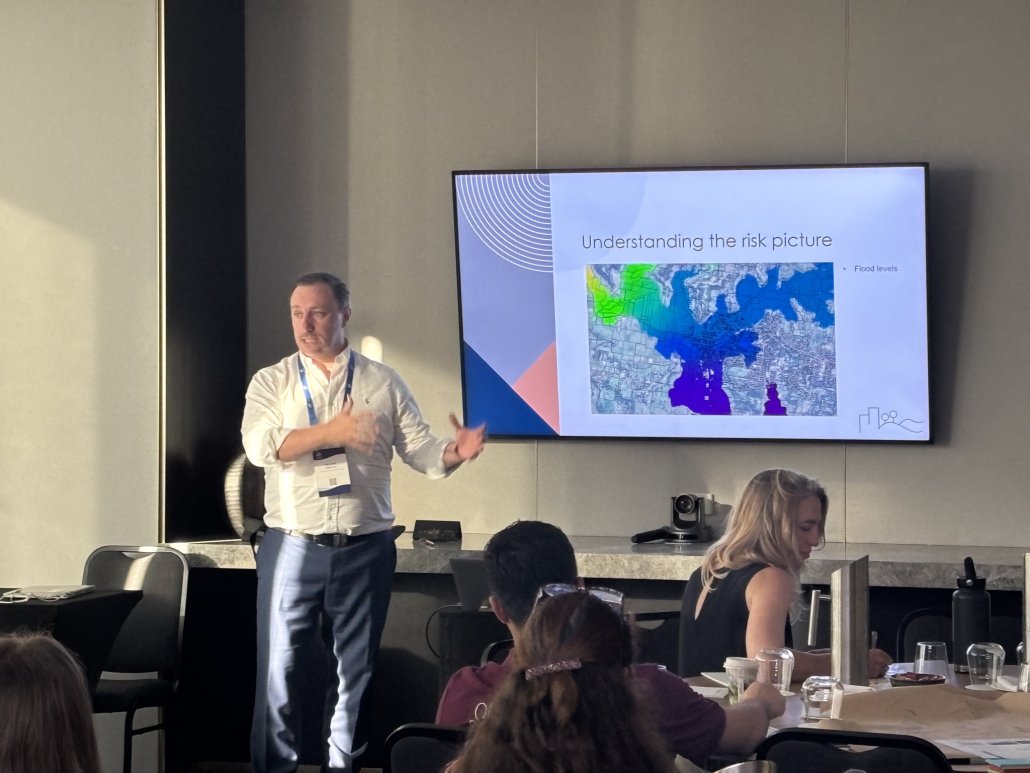
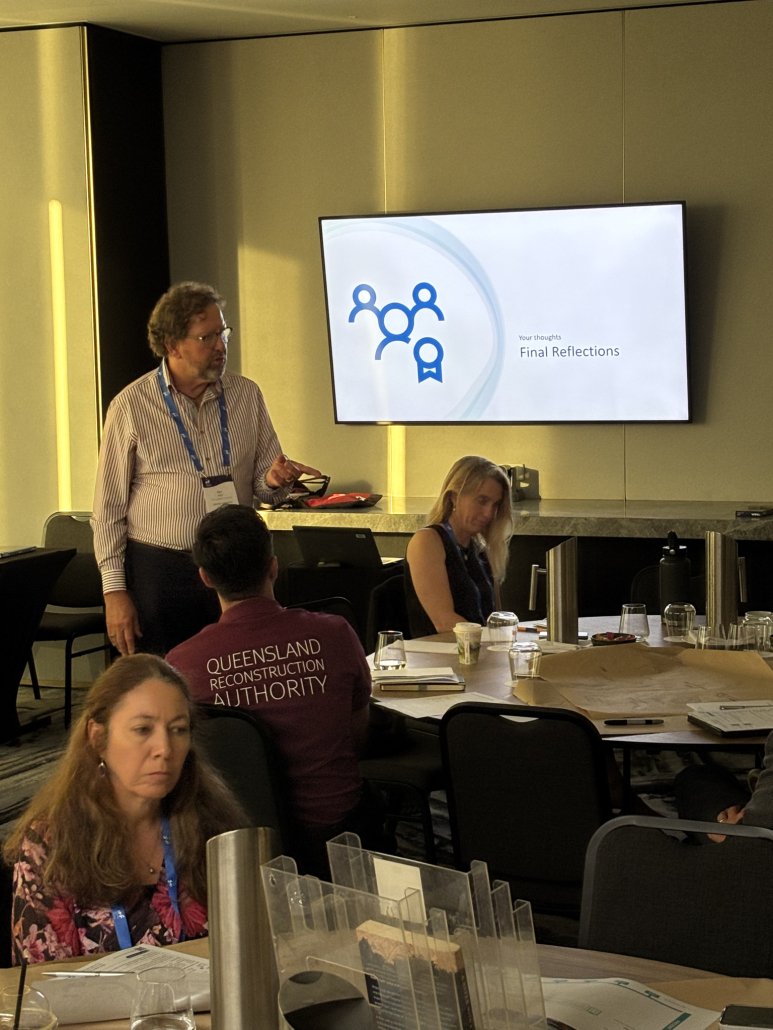
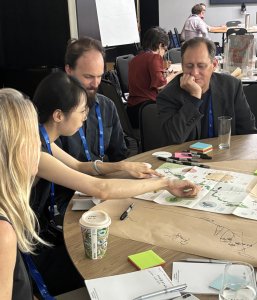
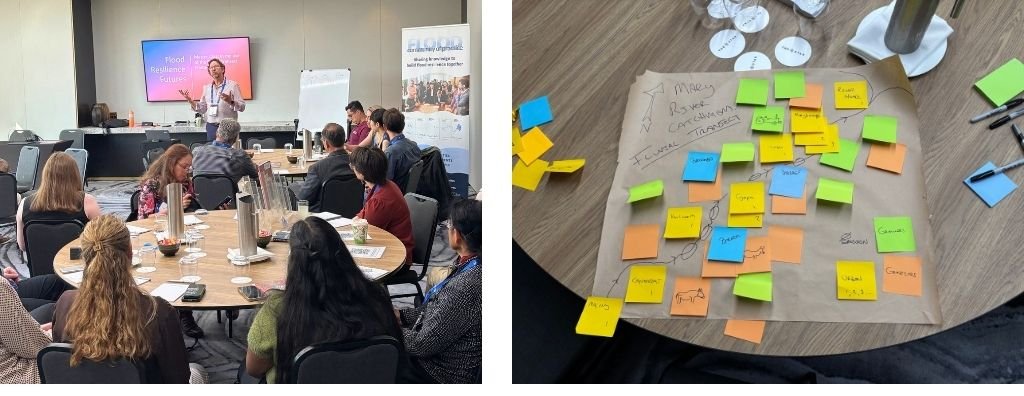
Case studies were shared from the Brisbane River Catchment (Piet Filet’s presentation) and Ambon, Indonesia (Declan Hearne’s presentation) to show how practioner and community-led designs have been used to adapt, plan, and act to future flood impact. It is a planning tool that visualises the values, challenges and opportunities or catchment and communities. Participants then all experimented with versions of the fluvial transect in catchments where they worked and examples are in the various photos. What was encouraging was the ability to use the tool at various scales – regional, local and even at a site based level.
With a fluvial transect perspective in place, we also explored additional applications namely:
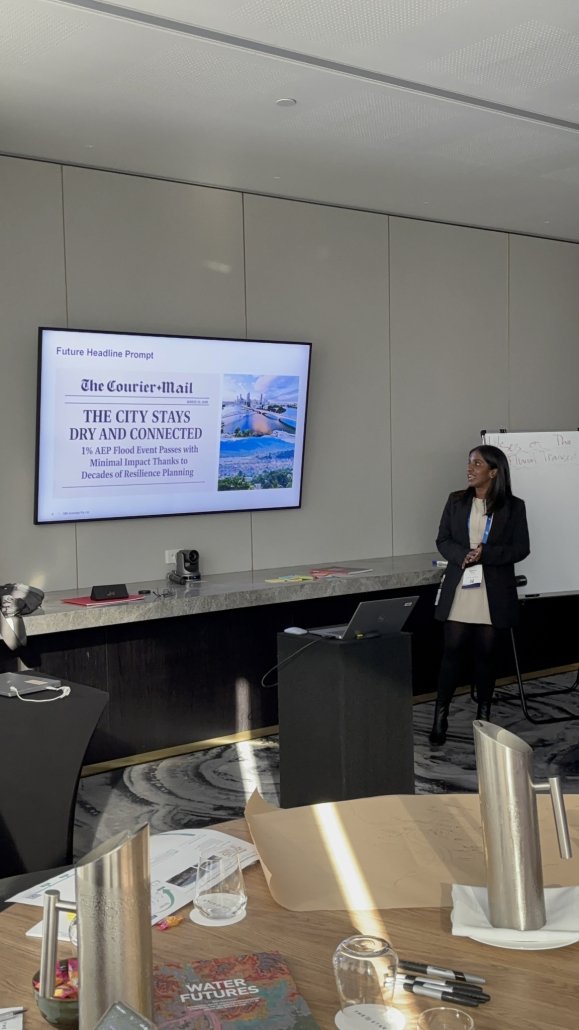
- Himanthi Menthis showed the participants how backcasting a future scenario can help better frame the steps needed to arrive at that desired future;
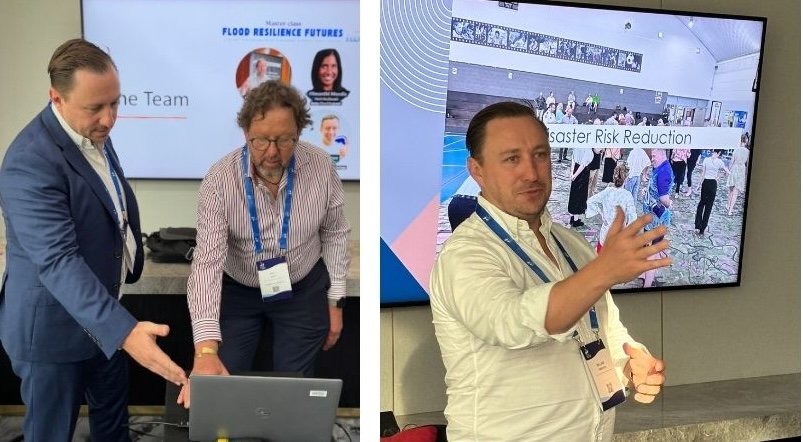
- Then from a disaster management and planning perspective, Will Prentice provided an overlay of issues that the different parts of the catchment would need to consider to have for an effective disaster management strategy to be in place.
This workshop brought together a mix of practitioners, including community advocates, planners, engineers, scientists and disaster management specialists – all working toward integrating social, ecological, and cultural dimensions into flood risk and catchment management.
Piet Filet – Founder & Convenor, Flood Community of Practice

Himanthi Mendis – Senior Flood Engineer, Mott MacDonald
William Prentice – Director & Principal Engineer, UPRS – Urban Places, Regional Spaces
 Slide Content goes here
Declan Hearne – Principal Catchment, Land & Heritage – Seqwater

For the participants in this Masterclass, we aim to support any ongoing interest in the application of the Fluvial Transect tool.
For example a Director from The International River Foundation Board is keen to se how this approach cam compliment and reinforce the work IRF is doing with their various partners in developing countries. Also, one participant designing a future International Land Care conference was eager to see how it could be a component of this conference.
More importantly at a grass roots level, increasing the awareness of this approach of functional geography is a fundamental step for better communicating and engaging colleagues and stakeholders for codesign activities. A number of Water Futures book were purchased by workshop participants, so we hope that this resource can be further applied.
In addition, each participant identified 2 to 3 next step options and we look forward to hearing what benefit and influence these steps have achieved. We will keep you posted.