Tools for the job? What can help build and design a sound catchment or flood resilience plan?
Why we came together
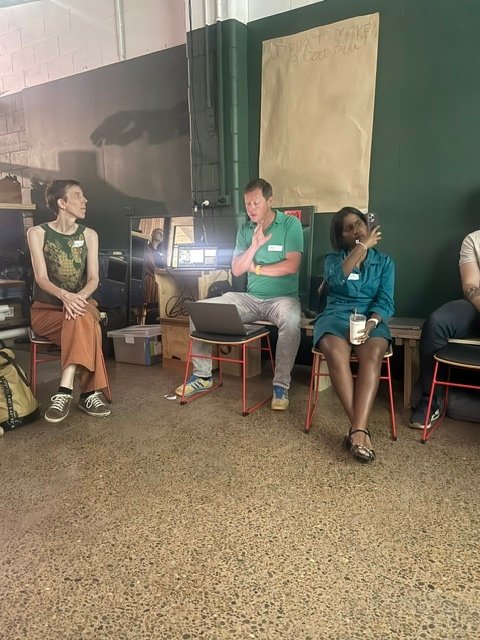
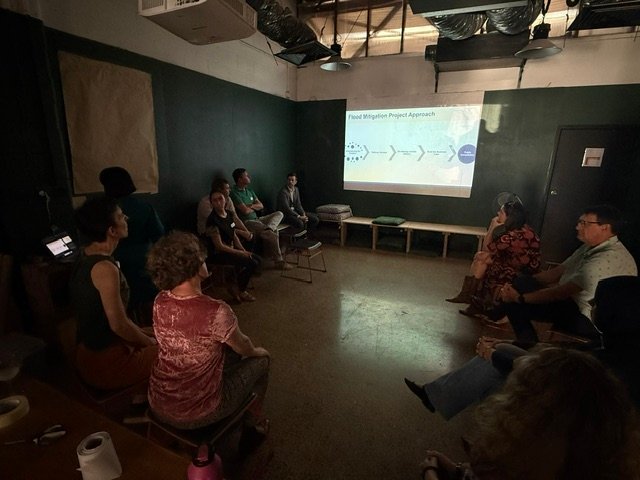
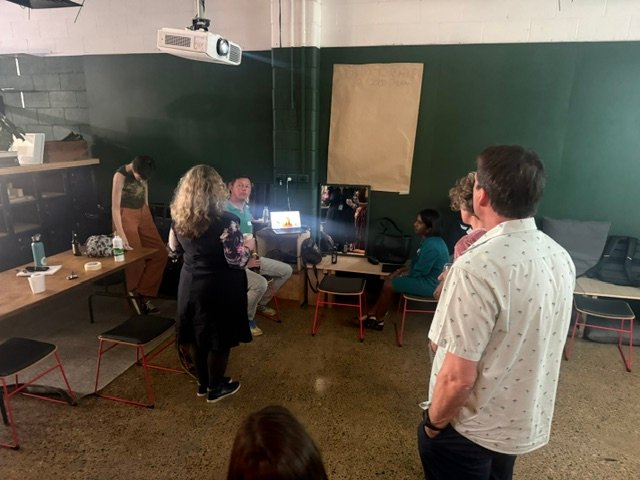
Designing and compiling a good catchment plan starts with having a clear purpose and a good process to build it. And along the way – how can some smart tools help you refine and focus the plan? On this basis and as a way to hear from a mix of experiences these were some of the topics of an afternoon workshop on Wednesday 16 September that brought together Flood CoP partners and a range of practioners.
A bonus impetus for arranging this event was a visit from Ivo Miltenburg – who normally is based with Deltares in Delft, the Netherlands 🇳🇱- but was visiting Brisbane as part of FUSE software user days. Previously I had meet Ivo and his colleague Gundla Winter while I was in Europe this year and on seeing one of their new tools – FloodAdapt – I could see this a way for Ivo to introduce the tool in conjuncion with other local colleagues.
Who joined us
The afternoon included a mix of colleagues from:
- Harch
- JDP
- Digital Water Solutions
- SunWater
- Deltares
- Water Technology
- Haskoning
- UQ Postgrad Students
Presentations
Topic – what does a good plan entail
Richard Sharp – a planner with a climate risk, catchment and flood resilince interests at Water Technolgy – walked us through the process to build the Ipswich Integrated Catchment Plan. It had a history and impetus from the Brisbane River Catchment management strategy – where each of the 5 Councils were also asked to develop a localised plan. It built off this broader modelling with supplementary local creek models. But in undertaking it – a plan champion – Phil Smith – was keen to design the purpose to support of range if planning needs – namely
-
flood risk analysis input into land use planning
-
Disaster management needs
-
Nature based solutions for waterway and flood resilince benefits
The plan was finished in 2021 and in presenting to Council in early 2022 – it preceded the February 2022 flood events – and so proved to be an immediate information and directions plan that Council was willing to implement. So being immediately RELEVANT was also a very useful “tool” characteristic that helped lock in the use of the plan.
Having multiple uses – a range of “in Council” collaborators – and ability to assist identify highly impacted properties eligible for the by back scheme – thus plan has proved to be an effective plan.
Check our Richards presentation to appreciate these features.
Topic – Visualisation of impacts
As any local catchment or community plan develops, the need for consultation with key stakeholders is a given. The Ipswich team certainly had a program of activity. Though imagine what 🙀 might be the benefit if the engagement could allow a visual,display of various options for good risk reduction?
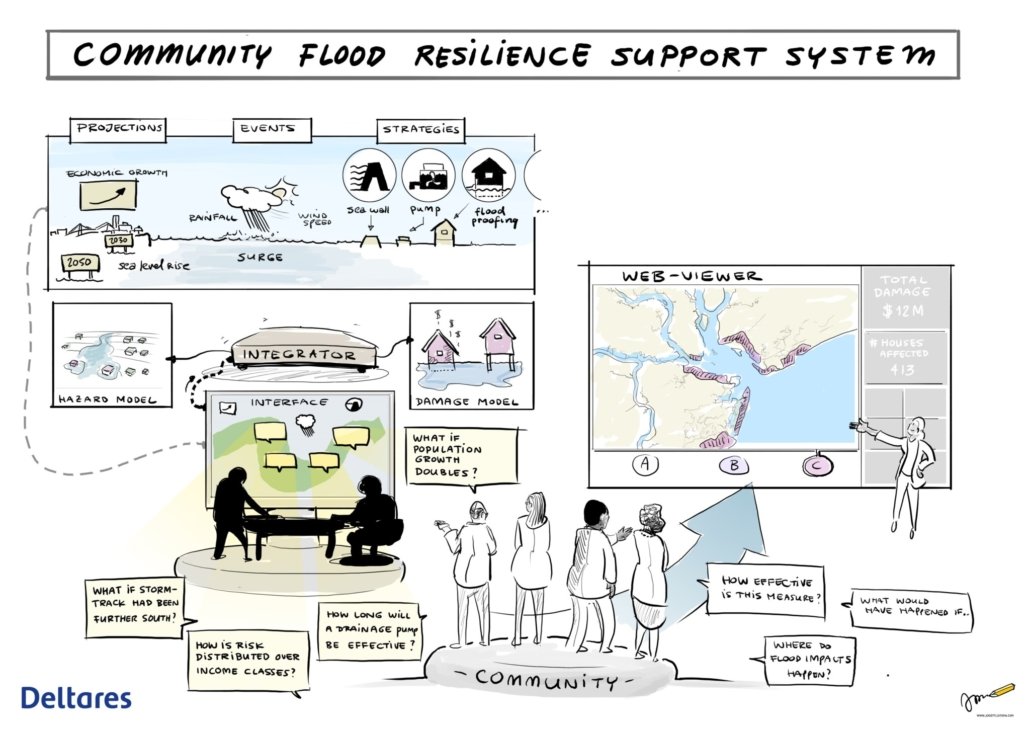
On behalf of the Delatres team that over the lst 4 to 5 years has developed the FloodAdapt tool, Ivo Miltenburg introdi=uced us toi the working of this platform. The purpose is to enable better understanding, communicating, opportunity for consensus-building and deciding what adaption measures to implement.
As a visual tool the platform allows comparison of different future projects, various pasts events and the effects of different measures to be considered and then portrayed – with property inundation, costs impacts and equity issues being displayed. As a way to have various stakeholders consider the options, it certainly opens up the dialogue and ability to have more clarity on what is possible.
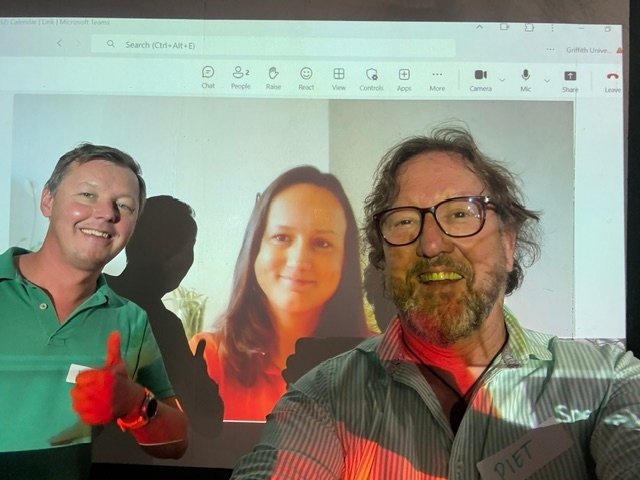
Ivo shared this presentation and then Gundala came online to provided some more detail responses t0 specific questions.
Topic – options analytics and the flow on
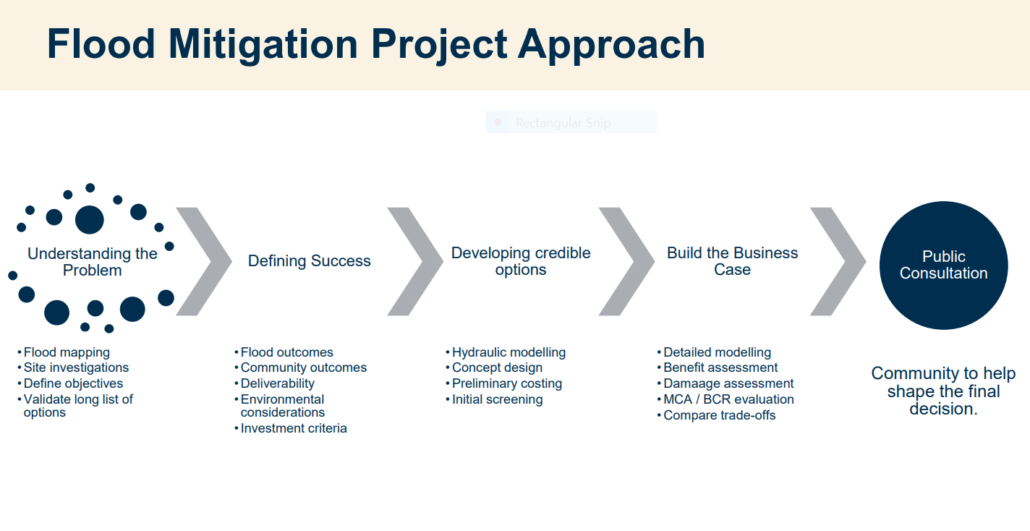
The third topic discussed with Himanthi Mendis from Haskoning was based on a project in Parramatta Sydney – where multiple opportunities to achieve flood impact reductions were in play? So which one to choose? Sure some classic comparative indicators were used – but also some clever thinking of redesigned options was also in play.
Yes the Multi Criteria Analysis – a well used methodology – was a way to roll some of the costs and benefits together- but this was only as good as flood modelling, engineering judgement, design development, costing and community consultation that sits under it. So the tool needs that investment too.
Based on the experience of this project the real challenge was not scoring the pre-defined flood mitigation projects. The real challenge was developing the project options with additional so that they became more beneficial and attractive and then to a level where decision-makers can confidently commit to the optimal one.
The option examples are best understood in Himanthi’s presentation well spelt out in